
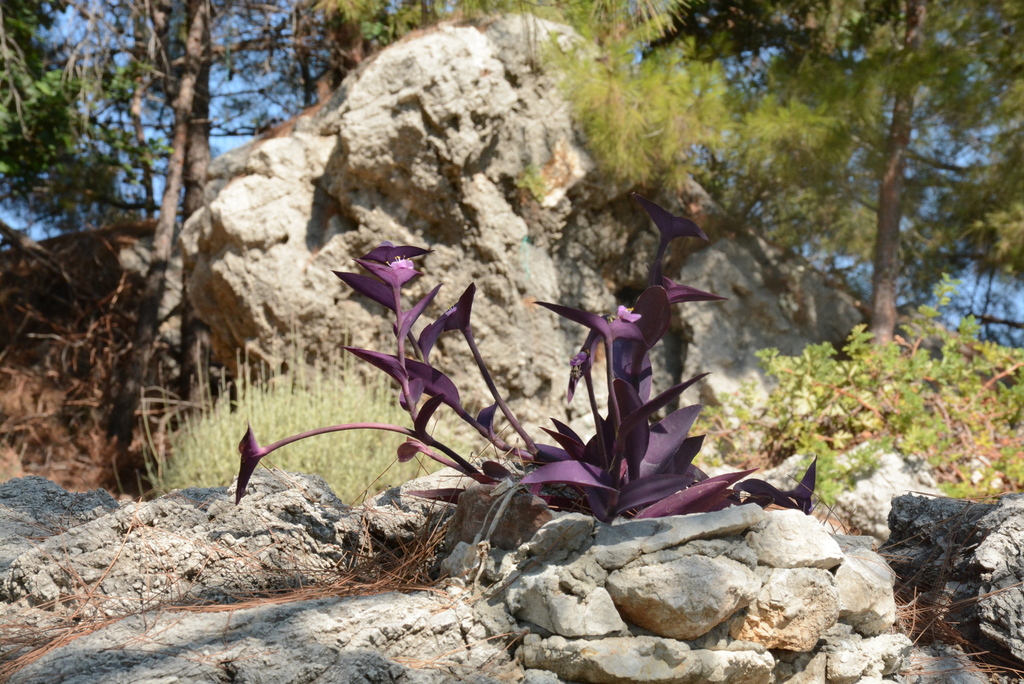
Purple heart
Tradescantia pallida
A trailing plant. Prefers bright indirect light. Wants a substrate that drains steadily. As a species it wants water about every 7 days. Mildly toxic if ingested.
Purple heart: how often should you water it?
That’s the interval our references converge on for this species indoors: roughly every 7 days between waterings, adjusted for your light and your season.
What we do and don’t publish
Why we don’t give you a date.
We publish the interval this species usually wants. We don’t publish a date for your plant — nothing here measures it. The interval is a starting point you adjust from what you actually log.
Care cadences
Not needed for this species: clean leaves · mist.
What’s known about this species
Light
Environment
Soil & pot
Plant in a well-draining potting mix and give it a bright, sunny spot to keep the purple color vivid; refresh by division or repot yearly in spring as it can get leggy.
Toxicity
Not specifically listed by the ASPCA, but closely related Tradescantia (Inch Plant, Tahitian Bridal Veil) are ASPCA-listed as toxic to cats, dogs, and horses causing dermatitis; the sap's calcium oxalates can mildly irritate skin and mouth.
The species’ year
A typical year for this species in a temperate northern home. It shifts with your light and your latitude — we don’t track your plant’s season, so treat this as rhythm, not schedule.
Verdalia holds the interval, your log moves it. Free to start.
Verdalia publishes species guidance curated from horticultural references. It does not measure your plant — you log what you do, and the intervals adjust to what you log. Suggest a correction